
Latymer All Saints C of E Primary School

History
Intent
At Latymer All Saints, we believe that the study of our high-quality, carefully planned history curriculum will inspire our children’s curiosity, fascination and sense of awe and wonder about Britain’s past and the wider world. They will develop a deep understanding about the lives and lifestyles of people in the past, including those of significant men, women and children as well as events from the recent and more distant past.
Over the course of their study, the children will become confident using key history skills across a range of contexts. They will:
- know and understand significant aspects of the history of the wider world: the nature of ancient civilisations; the growth and dissolution of empires; characteristic features of past non-European societies; achievements and legacies
- successfully develop their understanding of substantive historical knowledge and disciplinary skills
- develop a secure understanding of chronology, understanding that time periods are not isolated
- develop and use historical vocabulary, both orally and through writing
- investigate and interpret the past through making connections, drawing contrasts, analysing trends and framing historically-valid questions that interrogate the source materials
- understand the historical concepts of continuity and change, cause and consequence, similarity & difference, and use them to make connections, analyse trends, compose historically valid questions and create their own structured accounts, including written narratives and analyses
- practise methods of historical enquiry, understanding how evidence is used to make historical claims, and to discover how and why contrasting arguments and interpretations of the past have been constructed.
- gain historical perspective by placing their growing knowledge into different contexts: understanding the connections between local, regional, national and international history; between cultural, economic, military, political, religious and social history; and between short- and long-term timescales
- understand the methods of historical enquiry, including how evidence is used rigorously to make historical claims, and discern how and why contrasting arguments and interpretations of the past have been constructed.
Implementation
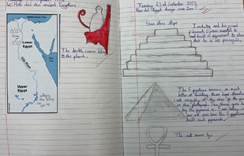
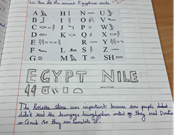
Through the Haringey Educational Partnership (HEP) Opening Worlds, history curriculum, pupils take part in engaging weekly lessons that explore a range of ancient civilisations, helping them develop a deep and connected understanding of the origins of human societies and how these early cultures continue to influence the world today.
Children study key civilisations such as Ancient Egypt, Greece, Rome, and the early Islamic world, investigating their achievements, beliefs, governance, and innovations. Through enquiry-based learning, pupils think like historians—examining artefacts, interpreting evidence, and questioning how and why these societies developed as they did.
The curriculum encourages pupils to make meaningful links between the past and the present, recognising how ancient ideas in democracy, architecture, writing, science, and trade have shaped modern life. Weekly history lessons therefore not only build chronological understanding and analytical skills but also inspire children to appreciate the lasting legacy of ancient civilisations and understand their relevance in shaping the world they know today.
Impact
Through the high-quality, carefully sequenced history curriculum at Latymer All Saints, pupils develop a secure chronological understanding of the past and recognise how significant events, individuals and ancient civilisations have shaped the world today. They develop the knowledge, vocabulary and disciplinary skills to think like historians by asking questions, interpreting evidence, exploring cause and consequence, and identifying continuity, change, similarities and differences across time. Through enquiry, discussion and written work, pupils become confident in explaining their ideas, constructing evidence-based arguments and considering different interpretations of the past. As a result, pupils develop a lasting curiosity about history, an appreciation of the achievements and legacies of civilisations such as Ancient Egypt, Greece, Rome and the early Islamic world, and an understanding of the connections between past and present. They leave equipped with the historical knowledge, critical thinking skills and perspective to engage thoughtfully with the world around them.
Useful website links:
- BBC History for kids www.bbc.co.uk/history/forkids
- National Geographic Kids www.natgeokids.com/history
- National Curriculum www.assets.publishing.service.gov.uk/PRIMARY_national_curriculum_-_History